Buy kidscool.eu ?
We are moving the project
kidscool.eu .
Are you interested in purchasing the domain
kidscool.eu ?
domain@kv-gmbh.de · 0541-91531010
Buy kidscool.eu ?
What are hydrogen halides?
Hydrogen halides are a group of chemical compounds formed by the combination of hydrogen and halogen elements such as fluorine, chlorine, bromine, or iodine. These compounds are highly reactive and exist as gases at room temperature. Hydrogen halides are important in various industrial processes, such as in the production of plastics, solvents, and pharmaceuticals. They are also used in the synthesis of other chemicals and in organic reactions. **
What are sodium halides?
Sodium halides are a group of chemical compounds that consist of sodium and halogen elements, such as chlorine, fluorine, bromine, or iodine. These compounds are formed when sodium reacts with halogen gases. Sodium halides are often used in various industrial processes, such as in the production of chemicals, pharmaceuticals, and as a component in some types of salt. They also have applications in the field of photography and as a source of halogen gas in some chemical reactions. **


Similar search terms for Halides
Top-Angebote
Products related to Halides:
-
Inspired Finds Interactive Soft Foam Dice Set Jumbo Pet Game Dice For Playtime, Training & Fun Activities pinkUnleash a wave of energetic excitement with our Interactive Soft Foam Dice Set, specially designed for playful petowners and their furry companions. Whether youre strengthening training routines or simply turning playtime into a game, these large...34,99 $*Shipping: 0,00 $Secure redirect to the provider
-
Market Central Felt Finger Numbers Math Toy Toddler Counting Early Education Learning Game Felt Finger Numbers Math Toy Toddler Counting Early Education Learning GameThis toddler Montessori felt math toy provides an interactive way for young children to learn basic numbers and early counting skills. Designed to build foundational math skills through handson play, it helps develop early childhood intelligence and...34,97 $*Shipping: 0,00 $Secure redirect to the provider
-
Inspired Finds Interactive Soft Foam Dice Set Jumbo Pet Game Dice For Playtime, Training & Fun Activities orangeUnleash a wave of energetic excitement with our Interactive Soft Foam Dice Set, specially designed for playful petowners and their furry companions. Whether youre strengthening training routines or simply turning playtime into a game, these large...34,99 $*Shipping: 0,00 $Secure redirect to the provider
-
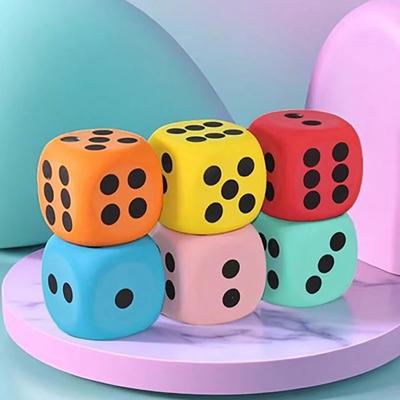
Inspired Finds Interactive Soft Foam Dice Set Jumbo Pet Game Dice For Playtime, Training & Fun Activities greenUnleash a wave of energetic excitement with our Interactive Soft Foam Dice Set, specially designed for playful petowners and their furry companions. Whether youre strengthening training routines or simply turning playtime into a game, these large...34,99 $*Shipping: 0,00 $Secure redirect to the provider



-
What are halides in chemistry?
Halides are a group of chemical compounds that are formed when a halogen element, such as fluorine, chlorine, bromine, or iodine, reacts with another element. These compounds are characterized by the presence of a halogen atom bonded to another element, typically a metal. Halides play important roles in various chemical reactions and are commonly found in nature, such as in salt deposits and seawater. They are also used in industrial processes, pharmaceuticals, and organic synthesis. **
-
What are examples of metal halides?
Examples of metal halides include sodium chloride (NaCl), potassium iodide (KI), magnesium fluoride (MgF2), and aluminum chloride (AlCl3). These compounds consist of a metal combined with a halogen element, such as chlorine, fluorine, bromine, or iodine. Metal halides are commonly used in various applications, including as catalysts, in the production of pharmaceuticals, and in the manufacturing of electronic components. **
-
Do halogen hydrocarbons belong to the halides?
Yes, halogen hydrocarbons belong to the halides. Halogen hydrocarbons are organic compounds that contain one or more halogen atoms (fluorine, chlorine, bromine, or iodine) bonded to carbon atoms. Since halides are chemical compounds that contain halogen atoms, halogen hydrocarbons fit this definition and are considered part of the halides group. **
-
With which solution can one detect metal halides?
One solution to detect metal halides is to use a flame test. When a metal halide is heated in a flame, it will produce a characteristic color that can be used to identify the metal present. Each metal halide will produce a unique color, allowing for the identification of the specific metal present. This method is commonly used in chemistry labs to identify unknown metal compounds. **


How do you form an ionic equation of halides?
To form an ionic equation of halides, you need to first write the balanced chemical equation for the reaction involving the halide compound. Then, you need to break down the compounds into their respective ions. Halides typically form ions with a -1 charge, so they will be written as X- where X represents the halogen. Finally, remove any spectator ions that do not participate in the reaction to simplify the equation and show only the ions that are involved in the chemical change. **
Can you explain the naming of halides of transition metals using the example of iron chlorides?
The naming of halides of transition metals follows a specific pattern. For example, in the case of iron chlorides, the Roman numeral in the name indicates the oxidation state of the iron ion. Iron can exist in different oxidation states, so the Roman numeral helps to specify which one is present in the compound. In the case of iron chlorides, FeCl2 is called iron(II) chloride, and FeCl3 is called iron(III) chloride, indicating the +2 and +3 oxidation states of iron, respectively. This naming convention helps to distinguish between different compounds containing the same metal but in different oxidation states. **
Top-Angebote
Products related to Halides:
-
Basic Fun K'NEX Education Maker Kit Large 863-Piece Construction Set for STEAM Learning and Building - 863-pieceGive young makers the freedom to invent, experiment, and build with the K'NEX Education Maker Kit Large. This substantial construction set contains 863 classic K'NEX pieces, including colorful rods, connectors, wheels, gears, and other components for creating a wide variety of models. Designed for open-ended exploration, the kit encourages children to think like engineers as they test structures, investigate movement, and develop their own designs. The included 64-page ideas booklet provides inspiration for up to 100 different models, while the versatile parts can also be used for imaginative free-building beyond the suggested projects. The large set is suitable for collaborative learning, with enough material for up to 12 children to work together on creative STEAM activities. It can support lessons and activities involving science, technology, engineering, and mathematics while helping to develop problem-solving, spatial awareness, hand-eye coordination, and fine motor skills.67,69 £*Shipping: 0,00 £Secure redirect to the provider
-
Basic Fun Fun Funko K'nex Education Intro to Simple Machines Wheels and Axles Set - 221 Pieces - STEM Learning for Kids Aged 7 and UpIntroduce your child to the world of engineering with the Funko K'nex Education Intro to Simple Machines Wheels and Axles Set. This engaging building set is designed to inspire creativity and promote STEM learning. With 221 vibrant pieces, kids can build and create various models, learning about the principles of wheels and axles. The set is suitable for children aged 7 and up, and the durable materials ensure hours of fun and interactive play. The colorful pieces are sturdy enough to withstand imaginative play, and the set encourages problem-solving and critical thinking skills.25,86 £*Shipping: 3,95 £Secure redirect to the provider
-
Inspired Finds Interactive Soft Foam Dice Set Jumbo Pet Game Dice For Playtime, Training & Fun Activities pinkUnleash a wave of energetic excitement with our Interactive Soft Foam Dice Set, specially designed for playful petowners and their furry companions. Whether youre strengthening training routines or simply turning playtime into a game, these large...34,99 $*Shipping: 0,00 $Secure redirect to the provider
-
Market Central Felt Finger Numbers Math Toy Toddler Counting Early Education Learning Game Felt Finger Numbers Math Toy Toddler Counting Early Education Learning GameThis toddler Montessori felt math toy provides an interactive way for young children to learn basic numbers and early counting skills. Designed to build foundational math skills through handson play, it helps develop early childhood intelligence and...34,97 $*Shipping: 0,00 $Secure redirect to the provider
-
What are hydrogen halides?
Hydrogen halides are a group of chemical compounds formed by the combination of hydrogen and halogen elements such as fluorine, chlorine, bromine, or iodine. These compounds are highly reactive and exist as gases at room temperature. Hydrogen halides are important in various industrial processes, such as in the production of plastics, solvents, and pharmaceuticals. They are also used in the synthesis of other chemicals and in organic reactions. **
-
What are sodium halides?
Sodium halides are a group of chemical compounds that consist of sodium and halogen elements, such as chlorine, fluorine, bromine, or iodine. These compounds are formed when sodium reacts with halogen gases. Sodium halides are often used in various industrial processes, such as in the production of chemicals, pharmaceuticals, and as a component in some types of salt. They also have applications in the field of photography and as a source of halogen gas in some chemical reactions. **
-
What are halides in chemistry?
Halides are a group of chemical compounds that are formed when a halogen element, such as fluorine, chlorine, bromine, or iodine, reacts with another element. These compounds are characterized by the presence of a halogen atom bonded to another element, typically a metal. Halides play important roles in various chemical reactions and are commonly found in nature, such as in salt deposits and seawater. They are also used in industrial processes, pharmaceuticals, and organic synthesis. **
-
What are examples of metal halides?
Examples of metal halides include sodium chloride (NaCl), potassium iodide (KI), magnesium fluoride (MgF2), and aluminum chloride (AlCl3). These compounds consist of a metal combined with a halogen element, such as chlorine, fluorine, bromine, or iodine. Metal halides are commonly used in various applications, including as catalysts, in the production of pharmaceuticals, and in the manufacturing of electronic components. **
Similar search terms for Halides
-
Inspired Finds Interactive Soft Foam Dice Set Jumbo Pet Game Dice For Playtime, Training & Fun Activities orangeUnleash a wave of energetic excitement with our Interactive Soft Foam Dice Set, specially designed for playful petowners and their furry companions. Whether youre strengthening training routines or simply turning playtime into a game, these large...34,99 $*Shipping: 0,00 $Secure redirect to the provider
-
Inspired Finds Interactive Soft Foam Dice Set Jumbo Pet Game Dice For Playtime, Training & Fun Activities greenUnleash a wave of energetic excitement with our Interactive Soft Foam Dice Set, specially designed for playful petowners and their furry companions. Whether youre strengthening training routines or simply turning playtime into a game, these large...34,99 $*Shipping: 0,00 $Secure redirect to the provider
-
Inspired Finds Interactive Soft Foam Dice Set Jumbo Pet Game Dice For Playtime, Training & Fun Activities blueUnleash a wave of energetic excitement with our Interactive Soft Foam Dice Set, specially designed for playful petowners and their furry companions. Whether youre strengthening training routines or simply turning playtime into a game, these large...34,99 $*Shipping: 0,00 $Secure redirect to the provider
-
Inspired Finds Interactive Soft Foam Dice Set Jumbo Pet Game Dice For Playtime, Training & Fun Activities yellowUnleash a wave of energetic excitement with our Interactive Soft Foam Dice Set, specially designed for playful petowners and their furry companions. Whether youre strengthening training routines or simply turning playtime into a game, these large...34,99 $*Shipping: 0,00 $Secure redirect to the provider
-
Do halogen hydrocarbons belong to the halides?
Yes, halogen hydrocarbons belong to the halides. Halogen hydrocarbons are organic compounds that contain one or more halogen atoms (fluorine, chlorine, bromine, or iodine) bonded to carbon atoms. Since halides are chemical compounds that contain halogen atoms, halogen hydrocarbons fit this definition and are considered part of the halides group. **
-
With which solution can one detect metal halides?
One solution to detect metal halides is to use a flame test. When a metal halide is heated in a flame, it will produce a characteristic color that can be used to identify the metal present. Each metal halide will produce a unique color, allowing for the identification of the specific metal present. This method is commonly used in chemistry labs to identify unknown metal compounds. **
-
How do you form an ionic equation of halides?
To form an ionic equation of halides, you need to first write the balanced chemical equation for the reaction involving the halide compound. Then, you need to break down the compounds into their respective ions. Halides typically form ions with a -1 charge, so they will be written as X- where X represents the halogen. Finally, remove any spectator ions that do not participate in the reaction to simplify the equation and show only the ions that are involved in the chemical change. **
-
Can you explain the naming of halides of transition metals using the example of iron chlorides?
The naming of halides of transition metals follows a specific pattern. For example, in the case of iron chlorides, the Roman numeral in the name indicates the oxidation state of the iron ion. Iron can exist in different oxidation states, so the Roman numeral helps to specify which one is present in the compound. In the case of iron chlorides, FeCl2 is called iron(II) chloride, and FeCl3 is called iron(III) chloride, indicating the +2 and +3 oxidation states of iron, respectively. This naming convention helps to distinguish between different compounds containing the same metal but in different oxidation states. **
* All prices are inclusive of VAT and, if applicable, plus shipping costs. The offer information is based on the details provided by the respective shop and is updated through automated processes. Real-time updates do not occur, so deviations can occur in individual cases. ** Note: Parts of this content were created by AI.